In Brief
If you work in downtown Chicago, choose your Metra line before you choose a western suburb. The BNSF runs from Aurora through Naperville, Downers Grove and Hinsdale into Union Station. The UP West runs from Elburn through Geneva, Wheaton and Glen Ellyn into Ogilvie. Then decide between walking to the train and driving to a station lot, factor in a hybrid schedule, and ride the commute at rush hour before you buy.
Pick the Train Line First, Then the Town
If you work in downtown Chicago, choose your commute before you choose your suburb. In the western suburbs that usually means one of two Metra lines: the BNSF, which runs from Aurora into Union Station, or the Union Pacific West, which runs from Elburn into Ogilvie Transportation Center. Once you know which line fits your office and your schedule, the list of towns worth touring gets short fast.
Most people do this backward. They fall for a house, then figure out the commute. I've been recognized as one of Berkshire Hathaway HomeServices' top relocation specialists, and the transferees who end up happiest are the ones who timed the trip to the office before they ever toured a home. If you're new to the area, my guide to moving to the Chicago suburbs covers the bigger picture. This post is just about getting to work.
The BNSF Corridor: The Busiest Line Into the City
The BNSF is Metra's busiest line, and it runs through some of the most established towns in DuPage County. Rush-hour service is frequent, and express trains skip stops on the way in. A few stops worth knowing:
- Naperville commuters use two stations: downtown Naperville and Route 59, which sits just over the Aurora line. Both see express service. Downtown's station is walkable from many older neighborhoods north and south of the tracks.
- Downers Grove has three stations: Belmont, Main Street and Fairview Avenue. The Main Street station sits right downtown, with shops and restaurants steps from the platform.
- Hinsdale also has three stations: Highlands, downtown Hinsdale and West Hinsdale. It sits closer in, which means a shorter ride, and the downtown station is the center of a downtown built around the train.
Lisle, Westmont, and Clarendon Hills also sit on the BNSF, each with its own station and its own feel. Union Station is on the west edge of the Loop, so check the walk or CTA ride from there to your building.
In a town with more than one station, the one closest to a house isn't always the one you'll use. Express trains don't stop at every station, so check which stop gets the trains that fit your schedule before you narrow down neighborhoods.
The UP West Corridor: Historic Downtowns and Room to Spread Out
The UP West line heads straight west into Kane County. It ends at Ogilvie, a few blocks from Union Station in the West Loop. Towns along it include:
- Wheaton, the DuPage County seat, with two stations: downtown Wheaton and College Avenue, near Wheaton College. Neighborhoods are within walking distance of both.
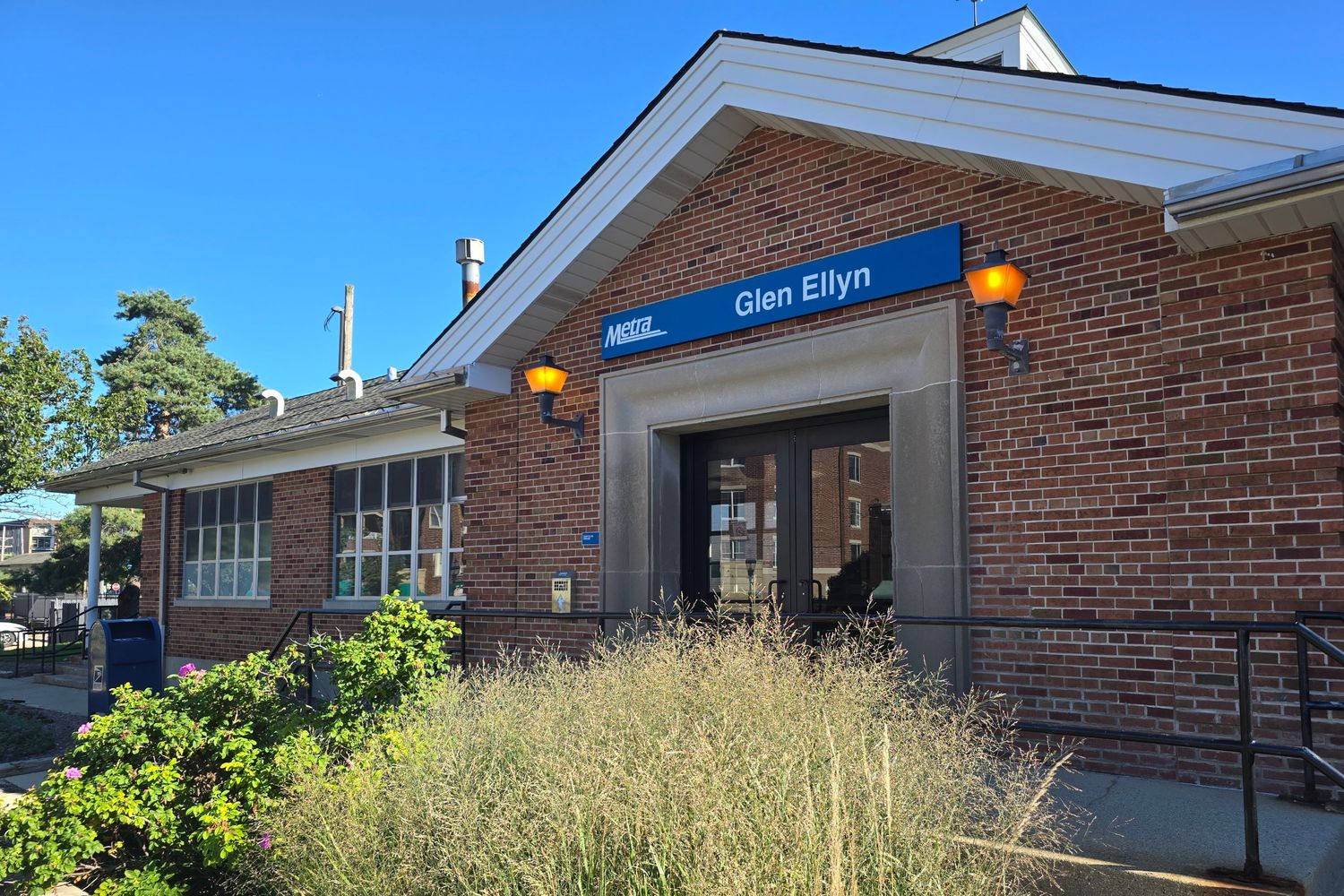
- Glen Ellyn, where the station sits in a walkable downtown near Lake Ellyn.
- Geneva, farther out on the Fox River, where you trade a longer ride for more room and a historic downtown.
Elmhurst, Lombard, Winfield, and West Chicago are on this line too, and each has its own station.
Walk to the Train or Drive and Park?
This is the decision that shapes your whole day. Walking to the station means no parking permit and no lot. It also usually means an older home on a smaller lot near a downtown, and you'll pay for that convenience.
Driving to the station opens up newer subdivisions with bigger lots. But commuter parking in many towns runs on permits or daily fees, and some lots have waiting lists. Call the village before you buy. Ask what parking costs, whether there's a wait, and how early the daily spots fill up.
What If You'd Rather Drive?
From the I-88 corridor, driving downtown means the Reagan Tollway feeding into the Eisenhower Expressway. From Will County towns like Bolingbrook and Plainfield, it's usually I-55, the Stevenson. Both are some of the most congested routes in the region at rush hour, and downtown parking adds real cost. Most full-time downtown commuters I work with end up on Metra for exactly that reason.
How Does a Hybrid Schedule Change the Math?
If you're downtown two or three days a week, a longer train ride may be a fair trade. That opens up towns farther out, like Geneva, Batavia, or Oswego, where you may get more house or more land for the same budget. If you're downtown five days a week, a shorter ride tends to win out over a bigger yard within a year.
Be honest about your schedule, and about how likely it is to change. A role that's hybrid today may not be hybrid in two years.
How Should You Test a Commute Before You Buy?
Ride it. Pick a weekday, get to the station at the time you'd really leave, and take the train in. Then walk or take the CTA to your office and time the whole trip, door to door. Do it once in the morning and once in the evening. Check Metra's current schedule for express trains from your station, because the right express can cut a meaningful chunk off the ride.
If you're relocating from out of state and can't test it in person yet, I'll walk you through each station, the parking situation, and the neighborhoods within reach of the platform, so your house-hunting trip is spent on homes that already fit your commute.
Key Takeaways
- Choose your commute before you choose your suburb.
- The BNSF runs from Aurora to Union Station through Naperville, Lisle, Downers Grove, and Hinsdale.
- The UP West runs from Elburn to Ogilvie through Geneva, Wheaton, Glen Ellyn, and Elmhurst.
- Walking to the train usually means an older home near a downtown. Driving to the station means checking parking permits and waiting lists first.
- A hybrid schedule can make a longer ride worth it. A five-day commute usually rewards a shorter one.
- Ride the train at rush hour, door to door, before you commit to a town.